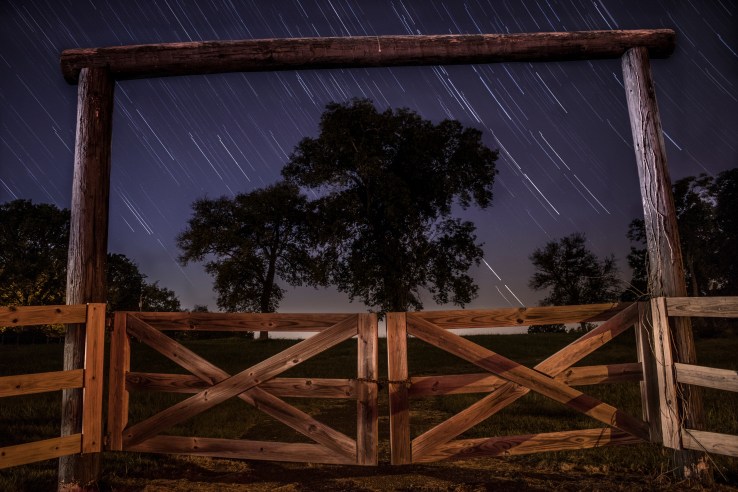
Beneath the Dragon Skies, Chapter II

Read [Prologue] and [Chapter I].

Chapter II

The curse should have been mine.

The next week passed by in a blur, and Alethea spent the time huddled in her room. She felt a hollow ache inside her. Rafa kept her company on most days, though they rarely spoke. He would bring news of the family and clan, which Alethea would take in with little reaction, before they lapsed into long silences.

Father and Mother told the other clan leaders that Abigail was ill and resting in their cabin retreat. They both bore it with remarkable grace, as far as Alethea could tell. She knew Father would need to handle clan politics and decide if he would continue to conceal the truth. A cursed Chieftain could not maintain his position. Furthermore, if the Phoenix’s prophecy proved true, a famine would soon set in, and he might need to contend with the Sparrow clan. All of this, in addition to accepting Abigail’s fate.

The curse should have been mine.

Her sister was beloved by the Dragons. Only four people even knew of Alethea’s existence, yet the curse passed over her and ensnared Abigail. What some might consider good fortune plagued her with guilt.

While she would never admit such cowardice aloud, she did not think the curse would be a terrible fate for her. While it was a tragedy to befall Abigail, who was full of life and vivacity, it was not such an awful alternative for Alethea. The outside world frightened her. There was almost an alluring quality to drifting in dreams for the rest of her life.

“Hey, Lethe.” Rafa knocked on the door. “Can I come in?”

He never knocked, or asked before. She knew he was treading carefully around her.

“Yes.”

She noted the dark shadows under his eyes and disheveled hair, but he still smiled bravely for her. Her heart throbbed with renewed vigor and she felt ashamed. Rafa cared for Abigail too, though he expressed no need for comfort.

“Anything new?” she asked, trying to infuse some warmth into her voice.

His expression turned bleak. “The crops are failing.”

“So it’s real.” She stared at the ground. “What’s Father doing?”

“He’s in endless council meetings, trying to convince them of the Phoenix’s prophecy. Or curse. He wants to meet with Sparrow, but there’s hard opposition from many of the clan leaders.”

“Why?” Alethea felt indignation stir inside her, and she clung to the sensation. It was the first feeling outside of dull aching she experienced since the curse took Abigail.

Rafa sighed. “There’s years of bad blood between the clans. Some have lost family in land skirmishes.”

Alethea thought of her father, valiant and noble in the face of trials. She felt a wrench in her chest. “I wish I could help,” she murmured. “Abi would know how to. If our places were exchanged—”

“Don’t say that,” Rafa interjected.

Her whole world was out there.” She gestured at the window, the words spilling out as she felt a sudden urge to make him understand. “It was bright, beautiful, romantic. She had everything. This is my world, Rafa. In here, with the four of you. It’s all I know.” She paused, and finally allowed herself to say the words. “The curse should have been mine. Look around you. It was already mine.”

Silence reigned as she and Rafa stared at each other, a current of shared pain passing between them.

“Lethe,” he said, quietly but firmly, “you can’t think that. Abi and your Father and Mother would never have wished it upon you.”

“You don’t understand.” She closed her eyes. “I would have taken it, if I could. Yes, because I love Abi, but also because I can bear it.” Unexpected anger coursed through her. “But now that witch cursed Abi and me in an even worse way, stealing her life and leaving me behind.”

“Then let us use it well, what she has left behind.”

Alethea looked behind Rafa to find Father standing there, a stern but kind look on his face. She felt a wave of embarrassment, wondering how much of her outburst he heard. At the same time, it was liberating to have said the words weighing on her heart for the past week—or longer.

“Father,” she greeted.

“Alethea, I have no right to burden you any further.” The shadow of grief spread over his face. “But I’m asking for your help.”

Abigail’s pearl pendant felt heavy around her neck. The cold, charcoaled-colored gem rested just above her heart, shifting as she bounced lightly on her steed.

Jade was Abigail’s horse as well. Rafa rode beside her at the start of their journey, using his hand to subtly guide her. To Alethea’s surprise and relief, horseback riding came naturally to her and she could handle herself after the first two hours.

“Demarion said you don’t have to do this,” Rafa whispered, when they drifted behind her Father and the half dozen leaders and guards accompanying them.

“I want to,” she said. “For Abi, and all the rest of us.”

Alethea tried to quell the fear battling for control of her, drinking in the new sensations instead: Jade’s formidable muscles moving beneath her, the relentless heat beating down on her skin, the smell of rock and shrubbery, and the craggy paths of the Adamaris circling the mountain.

So much could go wrong. Alethea was almost identical to her sister in appearance, but their personalities were worlds apart. Her father’s precarious position was a mere mistake away from ruin.

“I see them!” someone ahead of the riding party called.

They came to a slow halt and her Father waved for her to come to the front. She tried to present an aura of confidence as she rode up, privately grateful that none of the men had spoken to her or asked questions during their journey. They were the select few who knew her real identity after Father confided the truth to them. Loyal as hounds, he claimed, as he described these men. She heard the clicking of another pair of hooves, and knew Rafa brought up her rear.

“How are you doing?” Father asked.

“Fine,” Alethea replied. She sat up straighter and met his gaze. “I can do this.”

A genuine smile touched his lips. “I know. You are my Alethea Dragon-daughter.” His words warmed her. “Don’t worry. I will do all the talking. It’s simply tradition to bring the next-in-line for Chief.”

They began moving again. An elegant gray-haired woman led the other party and a young man with raven hair rode beside her. His high cheekbones and square jaw lent him a regal, commanding presence. Alethea felt small in comparison, a new wave of helplessness threatening to engulf her. She looked at her father and Rafa for strength, leaning on her father’s encouraging words.

“Demarion Dragon-Chief,” the woman said, dismounting from her steed in a fluid motion. The young man imitated her.

“Lady Meike of the Sparrows,” her father returned. He descended from his horse and bowed.

Rafa was already beside Alethea, helping her alight when Demarion glanced at his daughter. “This is my daughter, Abigail.”

“My son, Kaede.” Meike indicated the man on her right, who bent his head to acknowledge them.

“It has been a long time since our last meeting.”

“Yes,” Meike said, an odd smile gracing her features. “I remember you were not yet Chief then.”

“I can only aspire to emulate my father. Time has treated you well, Meike.”

She laughed. “Demarion, the Dragon with the honeyed words. Some things do not change. Now, tell me why you called for a meeting. Rumors reached me that it has to do with the sudden scarcity of food and water.”

His face became grave. “A Phoenix woman I once knew foresaw a famine come upon the Adamaris. Signs she gave me have just come to pass. It will mean suffering and loss for us both if this continues.” He paused. “She claimed there is a way to end it.”

Meike raised an eyebrow. “I’m listening.”

“If our clans make peace. We end the fighting. The Adamaris has room enough for all of us.”

She fixed a hard look on Demarion, but he did not waver. Alethea felt a thrill of pride at her father’s gallantry.

“You are ambitious, Demarion,” she said finally. “This is an age-old conflict.”

“I am not proposing this out of ambition, but what I hope is wisdom.”

Alethea’s gaze drifted to Kaede and she was startled to find him watching her. He had a disconcerting stare, too, with his piercing eyes and grim mouth.

“I am not opposed to peace,” Meike countered. “But we cannot simply say the words and expect all skirmishes to end. That is not the world we live in.”

Demarion spread his hands before him. “I’m listening,” he echoed.

A thoughtful look came over her, and her gaze skated between Demarion and Alethea.

“Only a powerful union between our clans can overcome the decades of bitterness.” She tarried for a moment. “A marriage.”

Alethea heard the Dragon men stir and murmur, but all the sights and sounds around her grew dim as Meike’s words reverberated inside her. A marriage. She wanted to close her eyes and wake from the sudden nightmare, but sheer, desperate resolve kept her from sinking to the ground. She could not let Father down.

Demarion spared a quick sideways look at her. “A marriage,” he repeated. “I am not opposed either, but I will not give my daughter to a loveless union so readily.”

“Fair enough.” A mysterious, knowing smile crossed Meike’s face. “I propose this then: Kaede will accompany you to your village, if you are willing. They may have a period of courtship, and if the terms are agreeable to both at the end, we can proceed.”

Her father fell silent before turning to Alethea. “Abigail? Only if you are willing.”

She found his expression open and honest. This was not his political mask. He truly would allow her to make the decision and not begrudge it either way. Simultaneously moved and overwhelmed, she drew in a deep breath and searched her thoughts. With Abigail’s curse and the famine roaring to mind, the answer seemed clear.

“I am willing.”

“Excellent.” Meike turned to her son. “Kaede can negotiate any specifics with you in my place.”

Without a formal farewell, the Dragons and Sparrows saddled their horses and prepared to leave. Alethea felt everything happen in such a swift turn of events that she could hardly believe the significance of what they established. Possible peace. An end to a long, bloody feud. A looming courtship and marriage for her.

Alethea saw Rafa make his way towards her, evident concern in his eyes, but Kaede appeared first at her side without warning. He towered over her by nearly a head and smelled of fresh grass and leather.

Without a greeting, he turned toward her and spoke in a low voice.

“I know you are not Abigail.”
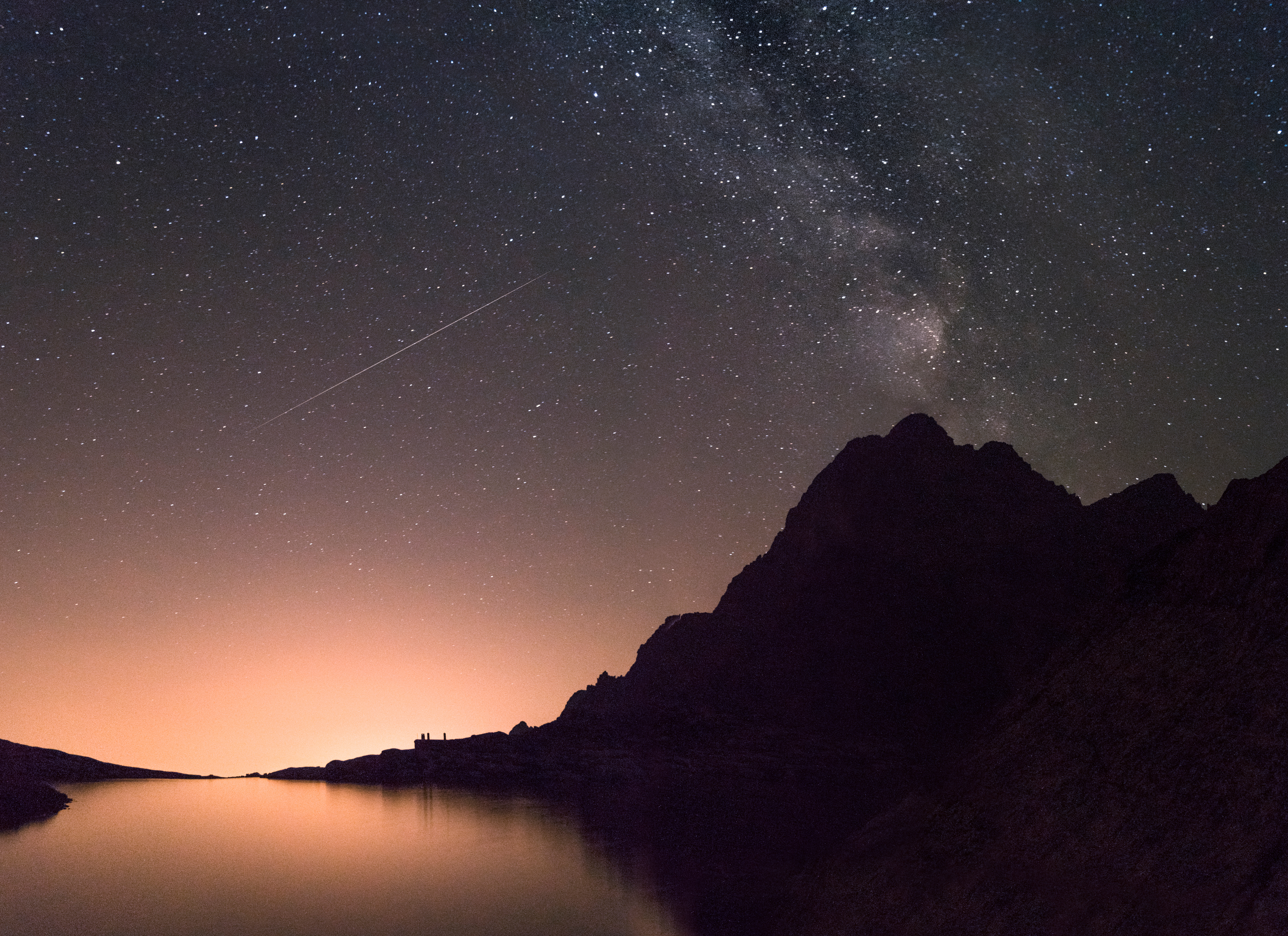
The First Love Story

Hark! The herald angels sing,
while wise men ask, how can it be?
That this is your immortal decree:
The Word that spoke us into being
would take on flesh to be an offering.

What Child is this?
The great I Am, the eternal God,
born to live a perfect life.
Emptied Himself of heaven’s glory,
born to be a holy sacrifice.

O holy night,
the advent of redemption’s drama,
when Love unraveled space and time:
a God came to dwell with sinners,
a Savior came to win His bride.


In the beginning was the Word, and the Word was with God, and the Word was God. He was in the beginning with God. All things were made through him, and without him was not anything made that was made. In him was life, and the life was the light of men. The light shines in the darkness, and the darkness has not overcome it. John 1:1-5

Merry Christmas!

Beneath the Dragon Skies, Chapter I

(Merry Christmas Eve! Enjoy.)

Read [Prologue].

Chapter I

Alethea traced the black specks carefully, her brush stroking then lifting off the wall with controlled force. She stepped back to examine her work. The outline of a wing unfurled on its white canvas, the tip grazing the edge of the window.

“Rafa,” she called.

A halo of black hair surfaced from behind a pile of cushions. Rafa ran a critical eye over her painting and a wry smile touched his face.

“It’s terrifying.”

“I finally made the curves right. It’s brighter tonight than I’ve ever seen.” She swept her hand towards the window.

Her gaze wandered outside to the night sky, traveling instantly to the most familiar constellation: the two large wings, the arched tail, and the trail of dense stars that father called the dragon’s breath of fire. If you use your imagination, he would say.

She loved the skies. Her family and clan had the stone mountains and green earth under their feet, but from her little lodge overlooking the village, she had all the heavens above.

“Is Abi visiting tonight?”

The hopeful note in Rafa’s voice was so faint she would have missed it if she knew him less. Alethea glanced at his expression, but his face was turned towards the ground.

“Yes.” She frowned, an anxious crease forming above her brow. “She’s late.”

Abigail collected enough admirers to stretch from the foot to the peak of the Adamaris Mountain. That, at least, was the common sentiment in the clan according to Rafa, Father and Mother. Abigail dismissed the notion entirely. Alethea could not help the occasional prick in her heart when the subject arose. Would she win as many suitors if their places had been reversed? Nevertheless, she felt ashamed of the slightest envy. Alethea loved her sister, and neither of them had chosen their lots in life.

She stole another glance at Rafa. But for him to develop any special interest in Abigail—

Surely, he knew an orphan could never inherit the Chieftain’s role.

“Your mother is worried. She said Abigail’s been wandering off to God-knows-where on the mountain these days.”

Alethea felt her chest clench. “Abi can take care of herself. She’s just adventurous.”

“Ah, right, the hot-blooded dragon spirit inside her.” He rose to his feet and made a flourish with his hands. “I think Demarion is secretly proud. Like father, like daughter. But Ziva…” he trailed off.

“She fears the curse is meant for Abi.” She kept her tone neutral.

Rafa stared at her, his indigo eyes crinkling. “Lethe, she fears it was meant for you both.

She heard the earnest empathy in his voice and flushed, looking away. Her family never showed greater favor to one daughter over the other. Abigail was their firstborn by mere moments, and tradition dictated that the eldest child of the Chief would inherit leadership of the clan. When Alethea arrived, a tiny bundle of flesh and bones, Father and Mother were delighted but afraid. Who would the Phoenix’s terrible curse fall upon?

Father could not conceal both children. The entire clan knew when Lady Ziva was with child. So he hid Alethea from the public, protecting at least one daughter. He built a cabin above the village for her, disguised as the family’s new private retreat. To the clan, Demarion Dragon-Chief and Lady Ziva bore a single daughter.

The oak double doors burst open, interrupting Alethea’s musing. Abigail barreled in, her dark hair flying wildly around her shoulders.

“Lethe, you will adore this tale,” she began without preamble, her voice echoing in the vaulted room. “Oh, Rafa, you will enjoy this too,” she added, spying him in the corner.

“Where have you been?” Alethea demanded.

“It’s not where I’ve been, but who I’ve been with.” Abigail winked, reaching into the fold of her mantle and producing a small bouquet of wildflowers.

“Is this another poor man’s heart you’re to break?”

Abigail waved off her sister’s sympathy for the unknown suitor. “This one is different. We met by accident, about a fortnight ago. I wanted to see the south side of the Adamaris, with the sea right below the cliffs. Some of the clan folk who ventured there said it’s the most beautiful at sunset.” She shrugged. “It was, albeit a terrifying climb.”

“Stars, Abi, Mother said not to go to the south face!” Alethea closed her eyes, and even the thought of the jagged heights sent a shiver through her.

“I know,” she grimaced. A shadow of guilt crossed her petite features but vanished swiftly. “Don’t tell her, please.” A mischievous gleam entered her eye. “But that’s where I met him. Just as the sun dipped out of sight, I saw his shadow on an impossible precipice.”

“Perfectly enchanting,” Alethea murmured in resigned agreement.

She felt a twinge in her chest. Alethea loved her stories, and though she feigned indignation at some of her tactics, she admired her sister’s daring spirit. Rafa said most the clan hailed her as a worthy heir to their father, regardless of whether she married.

Our fates fell in the right order. Abigail would not be able to stand a week confined inside the only walls Alethea knew her whole life.

And Alethea would not be able to brave the Adamaris or command the respect of the clan.

“We’ve been meeting since, every day if we can manage it,” Abigail continued. An unusually sheepish expression came over her. “I just didn’t want to tell all of you until I was more certain.”

Alethea felt a jolt. “Certain of what?”

“Well… he’s different,” she began, before breaking off.

Alethea followed her gaze to Rafa, who had stood silently since Abigail came in. His impish face appeared pale and vacant. She felt a brief pang of sympathy. She thought of Rafa as a brother—and Abi likely did as well. Still, they were not related by blood, and she could not fault him for developing feelings towards her sister. They were no longer children. It was Rafa, after all, who told Alethea of Abigail’s admirers and the high regard of the clan. She wondered for a moment how much his own appraisal colored those reports.

“Rafa, what is it?” Abigail stared at him, genuine concern in her eyes.

He did not respond, and Alethea scrambled for words to rescue him.

“He’s not feeling well,” she muttered.

“Sit down, then.” Abigail strode quickly towards him. “Stars, you look terrible—”

Drop those flowers!

His ordinarily tranquil voice boomed with power. Abigail froze in place, the bouquet still clutched between her fingers, and Alethea jumped, her eyes widening at him. Where did this fury come from? Abi mentioned a dozen suitors at least in the past! She wanted to shout her thoughts aloud, but knew she could not expose him like that.

“Rafa,” Alethea said slowly, “Please, calm down.”

He did not even glance at her. “Drop the flowers,” he repeated, more quietly but no less forcefully.

“What is the matter with you?” Abigail exclaimed, recovering enough to shoot an angry glare at him. “Are you jealous?”

Alethea bit her lower lip and looked worriedly at Rafa.

“There’s a briar rose in there, Abi,” he said, holding up his palm towards her. “Do not move. Just drop it.” He turned to Alethea now, whose face grew ashen. “You stay away too.”

“What?” Abigail stared, uncomprehending.

“It’s a Rosa Rubiginosa!” Alethea cut in. “The curse, Abi, drop it!”

But her sister appeared motionless now, her gaze entranced by the spray of flowers. “It can’t be,” she murmured slowly. She opened her hand to let the bouquet tumble out.

Alethea wanted to scream, but her throat constricted as a filmy pink flower caught on Abigail’s hand, a row of small thorns beneath its petals. Her sister drew in a painful breath and Rafa was beside her, his hand pressed against her back.

Abi!”

But her sister was unconscious already, a limp figure in Rafa’s arms. A small crimson stain appeared on the wooden floor beside the fallen wildflowers.

Beneath the Dragon Skies

Dear friends, readers and accidental visitors,

You know you’ve been a bad blogger when you can scroll down the first page and still see a post from last year. Oops. My excuse: grad school. My apology gift: a novella-length story. It’s a fairytale retelling (it should be obvious fairly quickly which one), and decidedly not Christmas-related. But I have the entire thing written and no plans for it other than having it take up hard drive space. There’s a Prologue + 10 installments, and I will not leave you hanging because again, its already completed.

I hope it adds some warmth and fun to your holiday season!

tpv9dh822va-stefan-stefancik

Beneath the Dragon Skies: Prologue

The yawning, rounded boulders rose above the cavern, sheltering its black entrance like stone wings. Demarion swung his left leg up the steep incline and thrust himself onto the last foothold. His breath came short and heavy. He leaned against a rock fissure and looked down at the impossible path snaking through the Adamaris Mountain.

The endless spiral of gray stones stared back at him, almost mocking with its winding and sudden cliffs. He shut his eyes against the vertigo and tried not to think of the return journey.

Turning to the cavern, Demarion caught a flicker of light. A fire burned at the end of the dark passageway. He stepped inside guardedly, his hand wandering to the hilt of his sword.

A familiar face withdrew from the shadows, her eyes vibrant behind the flames.

“Dear Demarion!” she exclaimed. Something false in her voice belied her smile. “So many seasons have passed without a visit from you. I was beginning to think you had forgotten me.”

He studied the woman before him and felt a quiet ache. Her familiar face recalled happier times, but he also discerned the acrimony that tinged the rim of her gaze.

“No, Sela,” he sighed, “I do not forget so swiftly. But your home is not easy to visit.”

Sela laughed and rose to her feet. He followed her as she drifted towards the mouth of the cave. The first hint of sunrise crept up the eastern skies in rich rose-gold shades.

“But the view is spectacular.”

“It comes with a cost,” he returned dryly. “You are steps away from a straight plunge into oblivion.”

She whirled to face him, her silver shawl billowing behind her. “There does not seem to be a place for me elsewhere in the Adamaris.” Her tone hardened. “I did not even merit an invitation to your latest celebration.”

An icy wind swept through him and a tingle of fear raced down his spine. He and Sela were friends once, in better and brighter days. Her seclusion was not entirely her choice; cruel circumstances drove her to seek refuge when the Phoenix clan fell into civil conflict, scattering most of their people across the mountain. Many died, for the Adamaris was an unforgiving place to those alone and without resources.

But her years in isolation made her volatile, and Demarion guessed the bitterness of her fate gnawed at her. He might have pitied her, but he knew she would despise it.

“I thought it unfair to ask a man to brave your heights for the sake of a festivity.”

“You could have come yourself.”

“Why do you think I’m here?” Demarion watched her carefully. “But it seems you have heard the news already.”

“I have my ways of finding out.” She slipped her shawl down her left shoulder slightly, and a dark red phoenix tattoo peered out. Her mouth curved into a half-smile. “My heartiest compliments to you and the mother. How is dear Ziva?”

Demarion felt his ire rise. “Do not pretend to care for her,” he snapped.

“Oh, Demarion. You think so little of me now.”

Her disdainful tone drove out his lingering fear, replacing it with hot anger. He bit his lip and tried to contain his temper, but her serene and insincere expression looked foreign. Whether it was the ravages of time or the cruelty of circumstance, he could find no trace of the high-spirited girl from his youth.

“It is not what I think of you, but what you are,” he murmured. “I have a clan, and a wife with child, depending upon me. Yet I risked this terrible climb for the sake of our old friendship. Have you no kindness or warmth left?”

She took a threatening step towards him. “You speak of kindness?” she hissed. “You speak of prizing an old friendship? You have distanced yourself for your own political gain. The Phoenixes are hated by all the clans.”

“I offered you a place among my people,” he rumbled.

“Years ago. But now you are Chief of the Dragons. How could you be seen as a friend to me?”

Her mockery cut like a knife through his fury. Demarion felt a still, strange sadness grow inside him.

“You do not know me, Sela,” he said quietly, this time without resentment. “I must go.”

He strode to the edge of the cave, about to begin his rocky descent, when she called out after him.

“Since you did make this dreadful trek to see me, I should return a favor.” She paused. “For the sake of our old friendship.”

Demarion felt his gut coil painfully. “No.”

Sela appeared beside him, her dark eyes haunting. “I merely wish to warn you. A famine is fast approaching the Adamaris. The greenery will die, food will be scarce—you can imagine the rest.”

He looked hard at her. “Why should I believe you?”

“You know I have the gift of foresight. Now, would you like to know how to end the famine?”

Demarion made no reply.

“Make peace with the Sparrow clan. The land cries out from the battle and bloodshed, with Dragon fighting Sparrow for control of the Adamaris.” Sela met his gaze. “How could you not tire from this ceaseless strife, Demarion?”

He felt the wrath surge inside him again as realization set in. “Peace will end the famine? Do not take me for a fool, Sela. This is not foresight. This is a curse!”

“A curse? You flatter me, to think I have the power to curse an entire mountain.” Her voice rang insincere.

“I know you are no stranger to curses.”

“No, I am not,” she mused, a distant expression overtaking her.

Demarion gave her a dark glare as he turned to leave, but she reached out and grasped the collar of his cloak. Immediately, his hand seized his sword and partially unsheathed it, the sound of metal ringing clear into the morning air.

She glanced down at the weapon and shook her head. “You distrust me so.” He loosened his grip, narrowing his eyes at her. “I was not finished. Given this formal breaking of our friendship, I ought to leave you with a parting gift.” Her tone remained calm but sounded eerily hollow.

“Sela, do not do this,” he raised his voice.

Caught in a trance-like state, she ignored him. “I will give you a sign to mark the start of the famine. When it is about to commence, your child will prick herself on the thorns of a Rosa Rubiginosa—your favorite flower, I remember—and fall into a deathly state, drifting in dreams until her mortal flesh fails.”

“No! Sela, you cannot!” Demarion’s anger transformed into horror.

“Oh, but dear Demarion,” she said, “I already have.”

“Undo this black spell!”

“I’m afraid I’m unable to. Perhaps another Phoenix could help you, but it seems you’re hard-pressed to find them in the mountain these days.” Sela looked at him coldly, releasing her hold on his cloak. “Give my greetings to Ziva.”

She vanished into the shadow of her home and Demarion fell against the stony ground, white-faced and trembling.

Wildfire and Whiskey

You waltz through the world,
like wildfire and whiskey with
maskless soul unfurled.

You know I don’t curse,
and that my only scandal
is dancing with words.

You say I’ve got wings,
but now we’re in free-fall and
I’m not good at dreams.


(I’m alive, and I really will try to write more regularly).

A Silent Salute

john-moore-141727

I love and hate that tributes to those we lose can be so eloquent. We can max out profundity and pretty words, inspiring tears and shivers, yet eloquence ends at the grave. We say these words, share these memories, but you’re still gone.

And we will continue with our lives, and slowly forget.

I guess that’s why funerals are more for the living than the dead. The tributes we pay are closure for us, even if they are infuriatingly, eloquently inadequate. But we have no other means. So here are mine.

You taught calculus and not poetry, but you were a type of John Keating—Robin Williams in Dead Poets Society—even though my friends thought you looked like Brad Pitt. Not that that’s an insult by any means.

I remember how you loved astronomy, and that was fitting for a man who lived with such fervor. The world couldn’t confine your spirit to a small blue orb spinning in a galaxy spinning in a universe spinning in infinity. Funny, you might have been the first one to teach me about infinity, outside of Scripture and church and the infinitude of God. I remember hearing it in your classroom, probably on a dreary gray morning, when you introduced asymptotes and limits, and bewilderment shot the sleep out of our eyes.

Why do we wait until someone is gone to remember, and realize the little things were really the big things? I can feel the years standing between then and now, with the space, the distance, the merciless drumbeat of time. Yet it also feels like yesterday, with the memory pressed so close.

You must have believed in strong ripple effects, and if not, your life has contradicted you. I wonder if that is why you chose a small classroom in a quiet suburb. Because I scrolled through your Facebook page today and saw generations of lives you touched, some that came before me, and some after. I read silently and left, unable and afraid to think of words to leave you in such a public place, but inspired by those who did. Instead, I scrolled through my old photos to graduation and found the one I took with you.

You, with your strong smile and hairstyle we poked fun at. Me, in my cap and gown, grinning with genuine unconsciousness of adulthood and its trials.

I stared at the picture for a while, thinking of how it marked an ending. The close of one chapter, and the start of another. I wish I visited more, kept in touch, after I left. I wish you had more real estate on the pages that followed.

I don’t think you were the Facebook stalker type—that belongs proudly to our generation—so here’s a brief summary for you: I went off to chase sunshine and dreams in California. Found some and lost some. I still laugh a lot, and at dumb things, but the smiles have stretched over a few more scars. Which is okay. The battle wounds of adulthood are bearable because of strong refuges. Like memories of your pi jokes and class pranks and juvenile things that remind me how good it was to be a kid, and how to savor the present before it’s gone.

I still make impulsive decisions sometimes, and that’s partly why I’m doing a graduate degree in engineering. When I took Optimization last year, I understood my professor about 10% of the time, and I owe a large part of that to someone who taught me well so I could still do derivatives years later like it was second nature. I’d get stumped after that, but thanks for the partial credit. This time, the kudos goes to your teaching, and not my begging.

John Keating and my old English teacher used to tell us Carpe Diem. Seize the day. You never said the words, too busy making lessons and helping the helpless—which were most high school students sitting in a math class. You never had to say the words because your life said it all.

You Carpe’d the hell out of every Diem.

I don’t like goodbyes as much as gratitude, so I will simply say thank you—

Thank you for teaching (so tirelessly).
Thank you for believing (that it doesn’t take a genius to survive math).
Thank you for sharing that one video (I still share with friends to make them laugh).
Thank you for accepting our insanity (and sharing your own).
Thank you for being kind (to the difficult and the downtrodden).
Thank you for your courage (in sickness and in health).

Thank you for the memories.

If I was back in your old classroom, I would—don’t laugh—stand on my desk in a silent salute to you.

Oh captain, my captain.

Seasons

your hand in mine
and a million miles
of sand and waves and sky
swirl around your smile.

the smell of autumn
with roasted coffee beans
and smoky haze swelling
through gold-crimson trees.

sticky, cinnamon rolls
warmed near our hearth
while our ice-chipped boots
bite the snow and earth.

naked branches blossom
in rosy pink and white
we dance down the sidewalk
and all the world is bright.

summer song

the world’s still cocooned in sleep
as golden light sails through my skies,
and I’m wrapped up messily—
half in sheets, half in dreams,
painted by your wistful smile.

it smells like lemonade and gasoline,
when the hot winds come alive.
I don’t dance, I protest
but she’s got a sunset-colored dress
and there’s witchcraft in her eyes.

sparks fly up, as if flames believe,
there’s life beyond the bonfire.
we tango, half in sand, half in sea—
and my world bleeds into hers
as crimson burns the dusk to night.

Quietly, She Builds the World

caleb-woods-tdhiUBgJCpg-unsplash

Poetry is oft for lovers, rarely for mothers.

Theirs is the thrill, the mystery, the romance, I suppose. They command our devotion, with a drama of ecstasy and despair. Some strange charm beckons us in the star-crossed tale and the daring plunge of two naked souls.

But what do we write of the ones who fold the laundry, steam the rice, and frighten the ants away? What glory do we dismiss, when we relegate her to nursery rhymes: the ones who bore us to life, and in times of thunder, hold up our skies?

Quietly, they build the world, when the world is not watching.

My mother, she builds

with thick skin and iron fingers

She never wears mittens, juggling pots with bare hands. She is not delicate, as fearless in the face of man’s mockery as she is with boiling dishes. Let them laugh, she says, why spend your life saving face? We choose whether their words wound us or not.

Grown in the soil of her country, she will always love its food, but never wear its masks. Who will judge you, when Heaven has pardoned you?

as a romantic and a realist—

She once danced for farmers in the rice paddies as dusk shimmered away, back when Mao was god. Her limbs moved with childlike grace, a brief light in poverty, a defiant laugh in the dark. Beside her candle and banned books, she dreamed of being a rural schoolteacher. Now, she visits suburban homes and American libraries, teaching calculus to the fearful and probability to Ivy League-dreamers. Still, she labors with compassion, and knows in silent wisdom that the rich may be poor in spirit.

like Sherlock to my Watson

She fires every gardener she hires for costly incompetence. She cannot bake sweets, but solves puzzles instead. What sort of grandmother will you be? I lament. Oh, I will teach your children about Calvin, not cookies. She forgets, sometimes, how to convert her height to feet and inches, and the order of planetary orbits. But communism was thin in the education department, and she has deeper things to ponder. She does not hear, sometimes, satire and sarcasm, because her habit is bald sincerity. She might offend you, or she might inspire you.

She lives good stories, and I try to write them. And sometimes, she wears funny hats.

in sorrow and splendor—

She is there when my world cracks and catches fire. Though she knows, in all her logic and reason, that tears do not fix broken hearts or dreams, she lets me weep. And when I cannot believe the kind, empty words of men, she speaks, like a songbird piercing hollow cathedrals. How splendid, when the strong in truth walk beside you in suffering. How steady and sure, the promises of God sound in her voice, whispered into the summer night.

Quietly, she builds the world

when she lays new dirt in the spring, when she fills the kitchen with garlic and soy, when she questions my sanity in all the right moments, and when she takes herself lightly, serious only in what matters most.

Quietly, she builds the world, yet teaches me—in triumph or in tragedy—not to love it so. But to store up in heaven the treasure of my soul.

Photo by Caleb Woods on Unsplash.